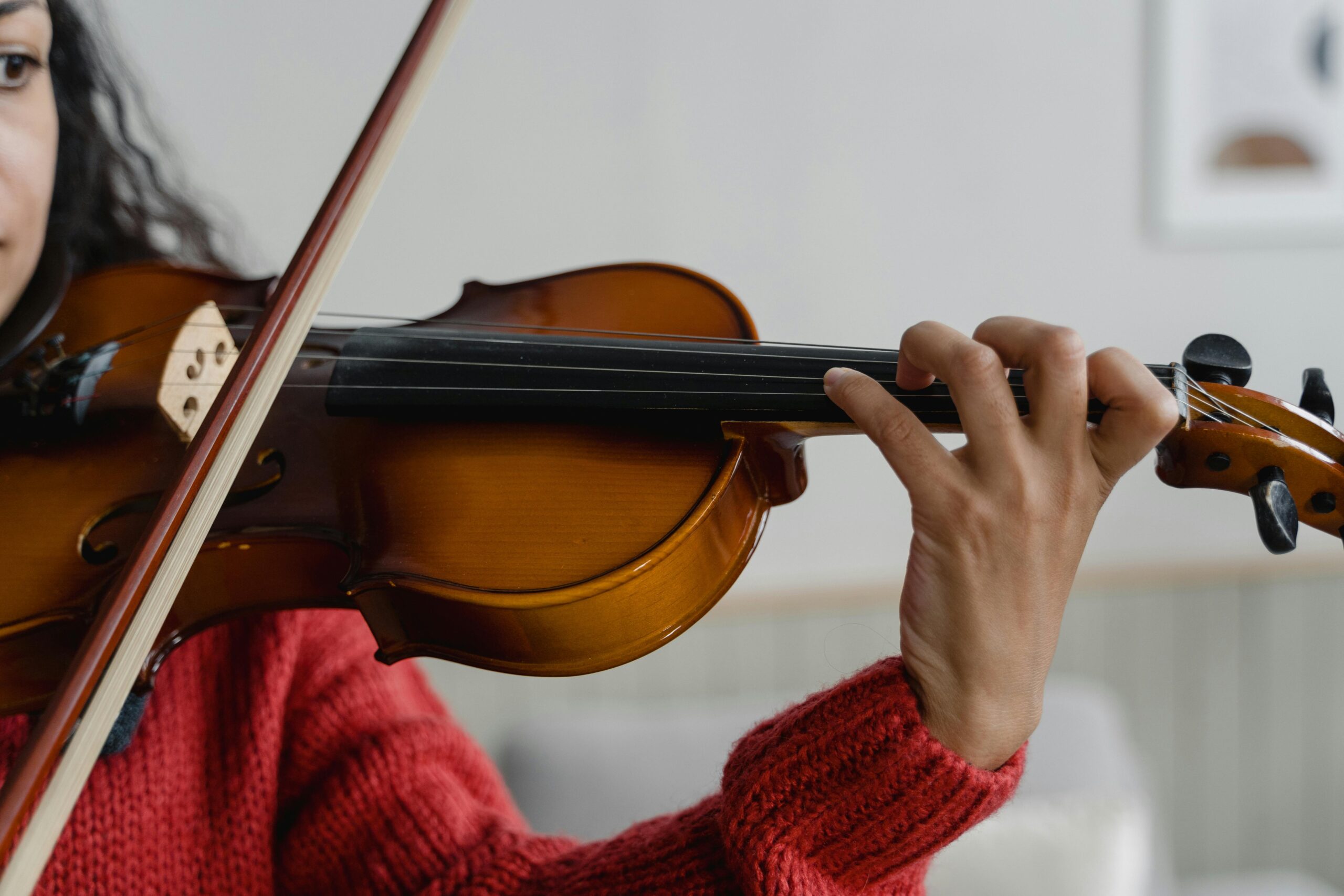
String crossings can make or break your performance. Whether you’re a violinist, cellist, or any bowed string player, the way you navigate between strings determines your musical expression and technical command.

Mastering precision in string crossings isn’t about brute force practice—it’s about intelligent micro-drills that rewire your muscle memory. This targeted approach transforms awkward transitions into seamless movements, unlocking the clarity and control every serious musician craves.
🎻 Why String Crossings Challenge Even Advanced Players
String crossings represent one of the most complex coordination tasks in string playing. Your bow arm must execute precise angular changes while maintaining consistent speed, pressure, and contact point. Meanwhile, your left hand coordinates fingering patterns that often shift simultaneously with these bow changes.
The challenge intensifies because each string crossing involves multiple muscle groups working in synchronized harmony. Your shoulder, elbow, wrist, and fingers must coordinate with split-second timing. When any element falls out of sync, you hear scratches, uneven tone, or rhythmic hiccups that disrupt musical flow.
Many players develop compensatory habits that temporarily mask these coordination gaps. You might slow down before crossings, add unnecessary accents, or unconsciously adjust dynamics to hide imprecise transitions. These workarounds become ingrained patterns that limit your technical ceiling and prevent true mastery.
The Micro-Drill Philosophy: Small Steps, Massive Results
Micro-drills isolate specific movement components, allowing your neuromuscular system to master each element before combining them. This approach contradicts the common practice of repeatedly playing difficult passages at full speed, hoping muscle memory will somehow click.
Think of micro-drills as zooming in on individual frames of a film. Instead of watching the entire scene blur past, you examine each frame’s details. This granular focus reveals exactly where coordination breaks down and provides targeted pathways for improvement.
The beauty of micro-drills lies in their efficiency. Five minutes of focused micro-drilling often produces more improvement than thirty minutes of mindless repetition. Your brain learns faster when given clear, manageable tasks rather than overwhelming complexity.
🎯 Foundational Micro-Drill: The Two-String Pivot
Begin with the simplest string crossing pattern: adjacent strings with open strings. Place your bow on the A string (for violinists and violists) or D string (for cellists). Play four slow bow strokes, focusing entirely on producing a centered, resonant tone.
Now execute a single crossing to the adjacent string. Move so slowly that you can observe every millimeter of the transition. Notice how your elbow adjusts height, how your wrist maintains flexibility, and how your upper arm subtly rotates. This isn’t playing music—it’s studying biomechanics.
Return to the original string with equal deliberation. Repeat this single crossing ten times, each time refining one specific element. First pass: focus on elbow height. Second pass: monitor shoulder tension. Third pass: ensure the bow maintains perpendicular contact with both strings.
Progression Variables to Expand the Drill
Once the basic pivot feels smooth, introduce systematic variables:
- Speed gradations: Use a metronome starting at 40 BPM, increasing by 4 BPM increments only when consistency is perfect
- Bow distribution: Practice crossings at frog, middle, and tip—each requires different arm mechanics
- Dynamic control: Execute crossings at pianissimo, then mezzo-forte, then fortissimo while maintaining tonal purity
- Rhythmic patterns: Vary the rhythm before crossing (quarter notes, eighth notes, triplets) to simulate musical contexts
Advanced Micro-Drill: The Triple-String Cascade
After mastering adjacent string crossings, tackle non-adjacent strings. This drill targets the larger angular changes required for skipping strings, common in arpeggios and chordal passages.
Start with whole notes: G string, pause, E string, pause, G string, pause. The pause isn’t musical—it’s analytical space. During each pause, check your setup for the next crossing. Is your bow angle correct? Is your arm trajectory clear? Are you mentally prepared for the distance?
Gradually reduce pause length while maintaining preparation quality. Eventually, the preparation becomes instantaneous and unconscious—this is muscle memory at its finest. But you’ve built it through conscious awareness, not mechanical repetition.
Add the middle string to create three-string patterns: G-D-E-D-G. This creates both skip crossings and adjacent crossings within one pattern, forcing your neuromuscular system to differentiate between movement scales.
🔬 Micro-Drill for Left-Hand Coordination During Crossings
Many string crossing difficulties actually originate in left-hand coordination. When your fingers change simultaneously with bow crossings, synchronization errors multiply. This drill isolates that specific coordination challenge.
Choose a simple scale pattern that crosses strings: A major, two octaves. Play it with separate bows, extremely slowly, with one critical rule: your left-hand finger must land before the bow crosses. This anticipatory finger placement ensures clean articulation.
Use a mirror to verify timing. Watch your left hand as you approach each crossing. You should see the finger land, then observe the bow cross. This visual feedback creates a mental model that eventually becomes kinesthetic awareness.
Gradually decrease the time gap between finger landing and bow crossing until they feel simultaneous. The micro-delay has trained your coordination system to prioritize left-hand preparation, eliminating the scratchiness that plagued your crossings.
The Resistance Drill: Building Crossing Strength and Stability
String crossings require not just coordination but also controlled power. This drill develops the specific strength needed for decisive, clean crossings without sacrificing flexibility.
Execute crossings at the frog with deliberate resistance. As you cross from one string to another, imagine pushing through thick honey. Your movement should be continuous but slow and weighted. This builds the stabilizing muscles around your shoulder and upper arm.
Perform ten crossings with this resistance focus, then immediately play the same crossing pattern at normal speed. You’ll notice dramatically improved stability and tone quality. The contrast training—heavy resistance followed by normal execution—creates rapid neuromuscular adaptation.
Apply this drill specifically to problem spots in repertoire. If bar 47 of your concerto has a notoriously difficult crossing, extract just that crossing and resistance-drill it for two minutes. The improvement in the actual piece will be immediate and noticeable.
📊 Tracking Progress: The Clarity Calibration System
Objective feedback accelerates improvement. Create a simple rating system to track string crossing clarity:
| Clarity Level | Description | Sound Characteristics |
|---|---|---|
| 1 – Rough | Audible scratching or grinding | Inconsistent tone, rhythmic disruption |
| 2 – Acceptable | Slight surface noise during transition | Tone mostly maintained, minor articulation |
| 3 – Clean | No extraneous noise | Smooth tone continuation, clear pitch |
| 4 – Transparent | Crossing is completely inaudible | Seamless tonal flow, musical phrasing preserved |
| 5 – Expressive | Crossing enhances musical intention | Dynamic control, intentional articulation possible |
Record yourself performing a passage with multiple string crossings. Listen back and rate each crossing according to this system. Focus your micro-drill practice on crossings rated 1-2, aiming to elevate them to level 3 within a week.
This systematic approach prevents the frustration of vague practice goals. Instead of “practice string crossings,” you have specific, measurable targets: “Elevate the three crossings in measures 12-14 from level 2 to level 3.”
The Mental Rehearsal Component: Visualization for Flawless Execution
Physical practice builds muscle memory, but mental rehearsal optimizes neural pathways. Neuroscience research confirms that imagining precise movements activates similar brain regions as actual performance, strengthening connections without physical fatigue.
Spend five minutes daily visualizing perfect string crossings. Sit comfortably, close your eyes, and mentally execute your micro-drills with complete clarity. Imagine the feeling of effortless crossing, the sound of pure tone, the visual of smooth bow trajectory.
Make your visualization multi-sensory. Hear the resonance, feel the bow hair gripping the string, see your arm moving with efficiency. The more vivid your mental rehearsal, the more effectively it reinforces your physical practice.
Mental rehearsal proves particularly valuable for difficult passages you can’t physically practice in the moment—during commutes, before sleep, or when instruments aren’t available. You’re literally programming your neuromuscular system without touching your instrument.
🎼 Context Integration: From Drill to Musical Reality
Micro-drills develop specific skills, but ultimate mastery requires integrating these skills into musical contexts. This transition phase determines whether your technical work translates to artistic performance.
Select a musical phrase containing challenging string crossings. Practice it three ways: first as a micro-drill (isolated, slowed, analytical), then as a technical passage (correct tempo, focus on accuracy), finally as music (full expression, emphasis on phrase shaping).
This three-stage approach bridges the gap between technical exercise and artistic expression. You’re teaching your body that the same precision from micro-drills must persist even when attention shifts to musical meaning.
Record both your micro-drill and your musical performance of the same passage. Compare the clarity ratings. If your drills achieve level 4-5 but musical performance drops to level 2-3, you need more context integration practice. The goal is maintaining technical excellence within artistic expression.
Repertoire-Specific String Crossing Challenges
Different musical styles present unique string crossing demands. Baroque repertoire often requires rapid, articulated crossings with distinct separation. Romantic works need smooth, legato transitions that obscure the physical crossing. Contemporary pieces might demand extreme crossings at unusual angles or speeds.
Analyze your current repertoire for crossing patterns. Bach’s violin sonatas feature extensive broken chord patterns with frequent crossings. Design micro-drills specifically targeting these patterns. Brahms sonatas require sostenuto crossings maintaining unbroken legato—create drills emphasizing smooth weight transfer.
This repertoire-specific approach makes practice immediately relevant. You’re not just improving abstract technique; you’re solving actual musical problems you’ll encounter in performance. This purposeful practice dramatically accelerates progress and maintains motivation.
⚡ Common Micro-Drill Mistakes and Corrections
Even with excellent intentions, players often undermine their micro-drill practice through subtle errors. Recognizing and correcting these mistakes ensures your practice time produces maximum results.
Mistake: Rushing to full speed. The temptation to immediately play crossings at tempo defeats the micro-drill purpose. Correction: Stay at slow speeds until every execution achieves clarity level 4. Speed is the last variable to add, never the first.
Mistake: Practicing without rest breaks. Neuromuscular learning requires consolidation time. Correction: Practice in focused five-minute blocks with two-minute breaks. During breaks, mentally rehearse or analyze what you just practiced.
Mistake: Ignoring body tension signals. If your shoulder aches or wrist stiffens during drills, you’re reinforcing poor mechanics. Correction: Stop immediately when tension appears. Reassess your setup and reduce intensity until you can practice without strain.
Mistake: Drilling without auditory feedback. Visual focus on technique can disconnect you from sound quality. Correction: Close your eyes for half your repetitions, relying entirely on auditory assessment of clarity.
Building a Sustainable Practice Routine with Micro-Drills
Consistency trumps intensity in skill development. A practice routine that integrates micro-drills sustainably produces better long-term results than sporadic marathon sessions.
Dedicate the first ten minutes of each practice session to targeted micro-drills. Your mind is fresh, your focus is sharp, and you establish a foundation for the remainder of practice. This consistent investment compounds daily, transforming your string crossing capability within weeks.
Rotate drill focus throughout the week. Monday: adjacent string crossings. Tuesday: skip-string patterns. Wednesday: coordinated left-hand crossings. Thursday: dynamic control during crossings. Friday: integrate all elements in repertoire excerpts. This variation prevents plateaus while ensuring comprehensive development.
Track your practice in a journal, noting which drills you performed, clarity ratings achieved, and specific observations. This documentation reveals progress patterns, identifies persistent challenges, and maintains accountability. You’ll see tangible improvement accumulating, which fuels continued motivation.
🌟 From Control to Artistry: The Ultimate Goal
Technical mastery isn’t an end—it’s the foundation for artistic freedom. Flawless string crossings don’t matter because perfection is inherently valuable; they matter because they remove obstacles between your musical imagination and its realization.
When string crossings become effortless, your attention shifts entirely to interpretation. You can focus on the composer’s intentions, the emotional arc of phrases, the dialogue between voices. Technical concerns fade into unconscious competence, liberating your artistic voice.
This is the true payoff of micro-drill practice. You’re not just building technique—you’re expanding your expressive capacity. Every hour invested in precision creates space for deeper musical communication, richer interpretive choices, and more compelling performances.
The journey from awkward crossings to transparent technique requires patience, intelligence, and systematic practice. Micro-drills provide the roadmap. Your dedication provides the progress. And ultimately, your music—now free from technical limitations—provides the reward that makes every minute of focused practice worthwhile.